01 / FOR THE INDIVIDUAL
For yourself.
If you are trying to build recovery in everyday life, Recovery Matters provides structured support, accountability, and continuity designed to help you move forward.
EXPLORE PROGRAMSRECOVERY MATTERS® · LONG-TERM RECOVERY CONTINUUMS
Life doesn't pause. Your support shouldn't either.
EXPERIENTIAL RECOVERY CAPITAL™
We help people build recovery capital through structured experiences, one-on-one guidance, and real-life application, designed to develop the resources and agency to sustain recovery, whether treatment came first or not.
Reawaken™ is the complete 12-month continuum. Begin with six months through Restore™.
A clear path from Day 1 to Day 365 and beyond.
Every phase builds toward one thing: a recovery you can carry yourself.
THE NEXT STEP IS PERSONAL
01 / FOR THE INDIVIDUAL
If you are trying to build recovery in everyday life, Recovery Matters provides structured support, accountability, and continuity designed to help you move forward.
EXPLORE PROGRAMS02 / FOR FAMILY
If someone you love is caught in a cycle of instability, repeated treatment episodes, or return to use, Recovery Matters offers a comprehensive, structured path forward designed to create agency in recovery.
REQUEST A CONFIDENTIAL CONSULTATION
Aftercare services exist.
A structured path for long-term recovery doesn't.
Recovery Matters builds the long-term infrastructure that begins after treatment ends — or wherever recovery begins.
Recovery Beyond Discharge™ is built on a simple principle: Recovery takes time. Sustained support builds the foundation for recovery that lasts.
That foundation must be built where recovery actually happens, in daily life, through relationships, work, stress, and the environments we navigate. Recovery Matters brings structure, accountability, and continuity into those realities, providing support that evolves as recovery progresses.
Recovery is not simply surviving addiction. It is the restoration of identity, stability, connection, and the self-trust that instability eroded over time.
The recovery continuums are the core of what Recovery Matters delivers. The wider vision develops additional pathways for access and support around the person, while keeping the continuum at the center.
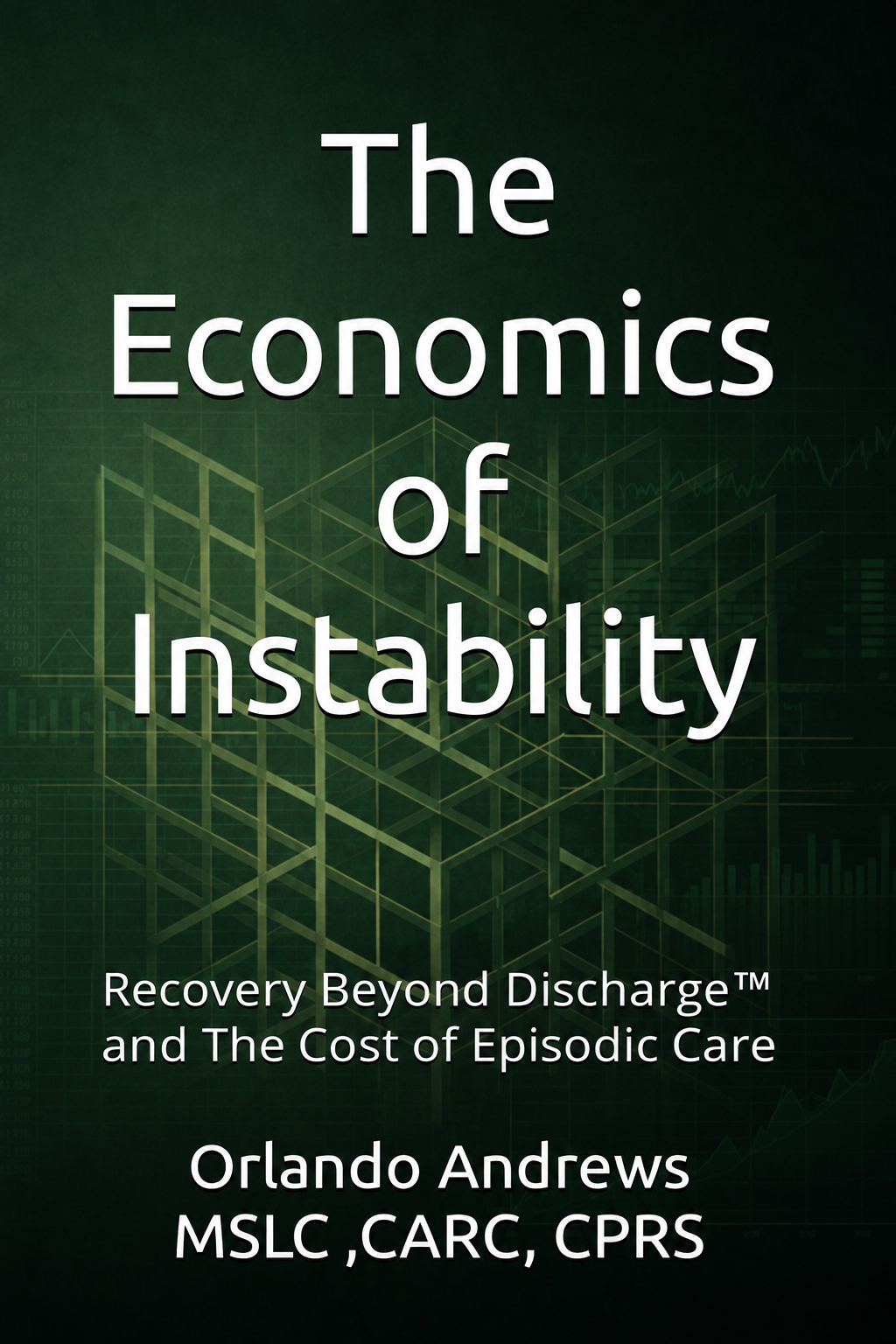
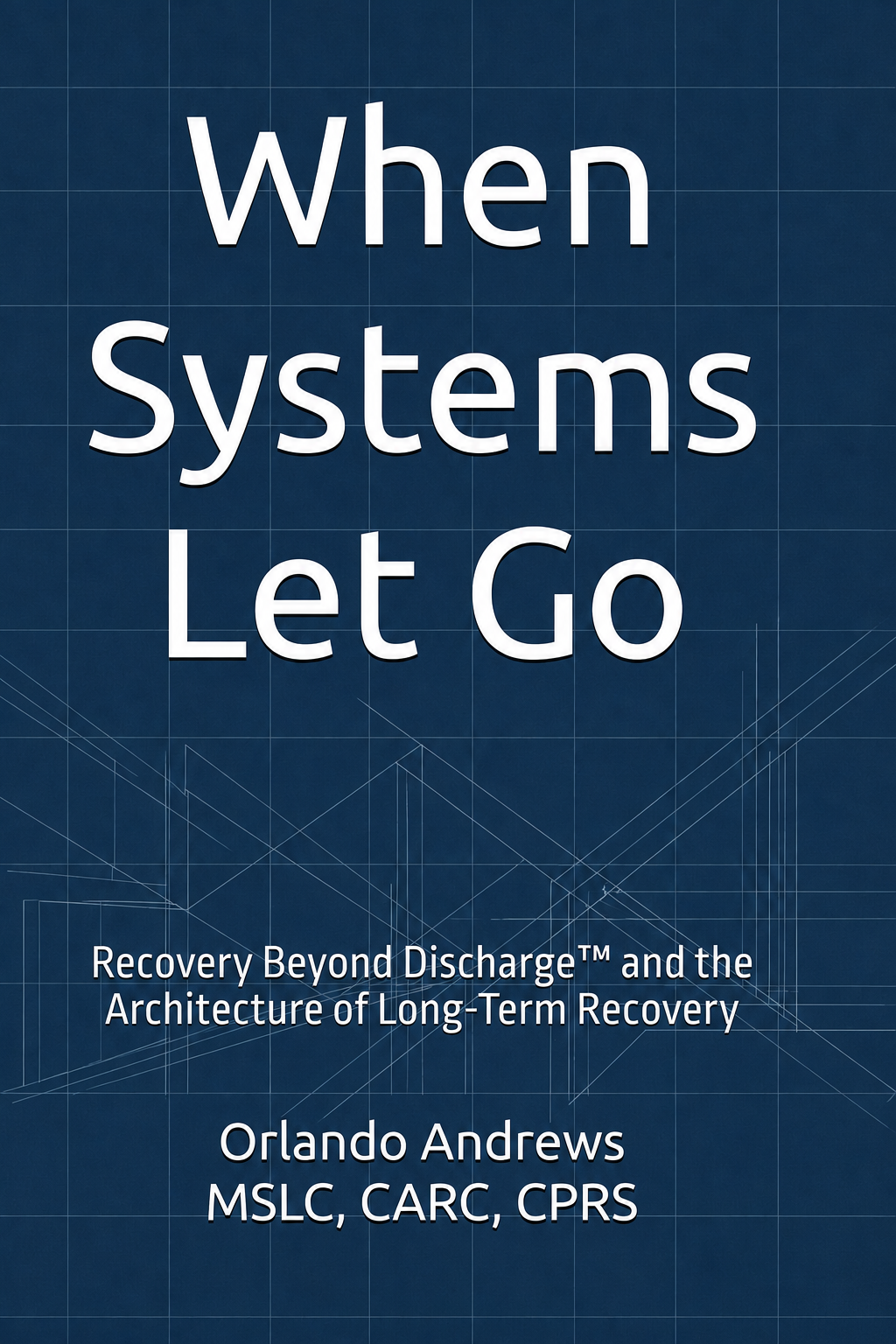
The questions behind this work also became two books exploring the gap between treatment and long-term recovery — and the cost of leaving that gap unaddressed.
When Systems Let Go
Recovery Beyond Discharge™ and the Architecture of Long-Term Recovery
Volume One →
The Economics of Instability
Recovery Beyond Discharge™ and the Cost of Episodic Care
Volume Two →
THE QUESTIONS DID NOT END ON THE PAGE
They became infrastructure.
The ideas behind these books informed the Recovery Matters recovery continuums and the vision for wider access and institutional support.
At the center of Recovery Matters:
Recovery Continuums.
The core service through which our philosophy becomes structured support.
Most programs discharge people once they are medically stable—long before the brain, identity, and nervous system have had the chance to repair and re-regulate. Stabilization is not recovery. It's the beginning.
Recovery Matters® integrates neuroscience-informed tools, biometric insight, identity awareness, and long-term structure to build capacity — not just achieve abstinence.
Neural pathways rebuild through repetition and consistency. Nervous system regulation is a process — not an event. Recovery unfolds over months as capacity, stability, and self-trust are restored.
With long-term, guided support, improvements in consistency, engagement, emotional capacity, and recovery stability emerge — and compound.
The Recovery Matters® model operates under the Recovery Beyond Discharge™ governing philosophy — a copyrighted systems framework guiding the design, ethics, and evaluation of long-term recovery support.
Treatment may end in 30, 60, or 90 days. Recovery does not.
The first six months are a critical period for building the structure, stability, and recovery capital needed for life beyond treatment.
The longer recovery is sustained, the more durable it becomes.
After one to three years, 66% maintain abstinence for another year.
By four years, the following-year return-to-use rate is approximately 14%.
The objective is not simply to reach the end of a program. It is to build a foundation that carries recovery forward.
Recovery requires identity awareness — not behavior compliance.
Willpower can break under extreme stress. A regulated sense of self will not.
VIRTUAL • NATIONWIDE • PRIVATE PAY
Recovery Matters® was built around a simple premise: recovery outcomes are determined across time. We provide the structure, accountability, and continuity designed to support that process long after treatment ends.